

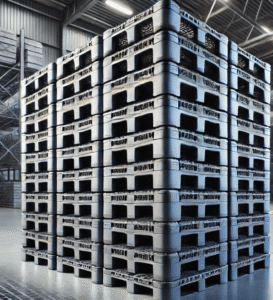
In today’s fast-moving world of online commerce, industrial supply products like nestable pallets are no longer just reserved for traditional channels. The rise of ecommerce offers powerful opportunities to market and sell these logistics essentials directly to businesses and supply-chain professionals around the globe. In this article we’ll explore how to harness ecommerce to sell nestable pallets, how supply-chain trends support the strategy, and practical steps you can take to build and grow an online commerce channel for these products.
As ecommerce continues to expand rapidly, its impact extends far beyond consumer-retail goods. Logistics, packaging, warehousing and supply-chain equipment are increasingly moving online. Nestable pallets—pallets that can be nested or stacked when empty, thereby saving space and reducing shipping and storage costs—are particularly well-positioned to benefit from this shift. According to market research, the demand for nestable molded wood pallets and similar types is rising, driven in part by ecommerce and the need for more efficient logistics. Market Report Analytics+1
By selling nestable pallets via ecommerce, suppliers can access a broader customer base (both B2B and B2C), provide product-information rich experiences, automate ordering and shipping, and tie into the broader logistics trends that are reshaping how goods move around the world. This article discusses how to make that happen.
The Ecommerce Landscape and Why It Matters for Nestable Pallets
Ecommerce isn’t just about consumer retail: it’s increasingly the platform for industrial and logistics-equipment sales. Understanding the broader context helps you position your nestable pallet offering correctly.
The growth of ecommerce and logistics-equipment demand
Ecommerce sales continue to grow globally, and as they do, the logistics behind them must scale too. For example, the global plastic pallets market is projected to grow from about USD 8.3 billion in 2024 to USD 14.6 billion by 2034, with growth driven by ecommerce and retail industries. Global Market Insights Inc.+1
Similarly, the market for nestable molded wood pallets is being driven by ecommerce adoption and supply-chain efficiency needs. Market Report Analytics+1
Ecommerce trends you can leverage
The broader ecommerce ecosystem offers many features and channels you can leverage when selling nestable pallets online. For example:
-
Growing demand for mobile commerce, personalized experiences and friction-free purchasing. BigCommerce+2Digital Commerce 360+2
-
The increasing role of B2B commerce (business-to-business) online. Digital Commerce 360+1
-
Logistics, packaging, and supply-chain optimization becoming part of the ecommerce story. ecommercetimes.com+1
-
Sustainability and efficient use of space becoming important differentiators. xuanshengplastic.com+1
Why nestable pallets fit the ecommerce model
Nestable pallets are a good candidate for ecommerce for several reasons:
-
They are a logistic product where buyers will willingly research online, compare options, and then purchase in volume.
-
They benefit from rich product information (dimensions, materials, nesting ratio, weight capacity, sustainability certifications) which can be well-presented in an ecommerce store.
-
They map nicely into global shipping, warehousing, and logistics operations—fields that are themselves being disrupted by ecommerce.
-
The cost-and-efficiency story (saving storage space, reducing shipping volume when empty) is compelling to modern logistics-minded buyers.
With that foundation in place, let’s walk through how to build an ecommerce strategy for nestable pallets and run it successfully.
Building an Ecommerce Sales Channel for Nestable Pallets
Here is a roadmap for using ecommerce to sell nestable pallets effectively.
1. Define your product offering and value proposition
Start by clearly defining what your nestable pallets are, and why buyers should choose them. For example:
-
Material: plastic, wood, molded wood, press-wood etc. Provide specs for weight capacity, durability, stack/nest ratio.
-
Nesting/stacking efficiency: how much space is saved when empty? (For example, one supplier claims stacked storage reduction of 60%. xuanshengplastic.com )
-
Logistics cost savings: shipping more on-truck, reducing empty volume, enabling lower storage costs.
-
Sustainability credentials: reusable, recycled materials, lighter transport impact.
-
Use-case fit: warehousing, manufacturing lines, cold-chain, export containers.
-
Differentiation: e.g., custom sizes, special materials, compliance with food-industry hygiene, export-friendly certifications.
By getting clear on what makes your nestable pallets special and what pain-points they solve (space, cost, logistics efficiency, sustainability), you’ll be able to tailor your ecommerce presentation accordingly.
2. Build an ecommerce platform and catalogue experience
Your online store should behave like a professional industrial catalogue, with ecommerce functionality. Key elements include:
-
Product pages with clear images, specifications, dimension drawings, load ratings, nest ratio, materials and certifications.
-
Category pages: e.g., “Nestable Pallets”, “Collapsible / Stackable Pallets”, “Export-Container Pallets”.
-
Search and filtering: allow business buyers to filter by size, nesting ratio, material, industry use.
-
B2B features: bulk pricing, quantity breaks, account logins, quote requests, tiered shipping.
-
Checkout options suited to business buyers (purchase orders, net terms, invoicing).
-
Shipping/fulfillment info: how pallets will ship, stacking when empty, export packaging.
-
Content/education: blog posts, case studies, so buyers understand the benefits of nestable pallets and how to integrate them into logistics operations.
You may choose a standard ecommerce platform or a headless architecture—for example, using a system that supports the flexible front end and business logic separated (see “Headless commerce”). Wikipedia
3. Drive traffic and awareness
Having the store is one thing; getting buyers to it is another. Consider these tactics to attract industrial/logistics buyers:
-
Search engine optimization (SEO) for key terms: “nestable pallets”, “space-saving pallets”, “logistics stacking pallet”.
-
Content marketing: publish articles about how nestable pallets reduce storage costs, are compatible with ecommerce logistics, case-study videos, customer testimonials.
-
Paid search/LinkedIn Ads: target supply-chain professionals, warehousing managers, manufacturing operations, logistics engineers.
-
Trade-shows & online events: combine your online presence with offline logistics exhibitions, webinars.
-
Partnerships with logistics/warehouse-equipment blogs or newsletters.
-
Offer downloadable resources: e.g., white-paper “How Nestable Pallets Improve Warehouse Efficiency for Ecommerce Fulfillment”.
4. Educate buyers with content and value story
Because nestable pallets are somewhat specialized, it’s beneficial to provide more than just a product listing. Educate buyers on the benefits:
-
Explain how using nestable pallets saves space and reduces shipping volume when empty.
-
Demonstrate how this maps into ecommerce fulfillment, return flows, multi-channel logistics.
-
Show cost-savings calculations: if empty pallets occupy less space, container or truck utilization improves.
-
Highlight sustainability: fewer trucks required for empty returns, reduced material usage (especially for molded wood or plastic versions).
-
Provide case-studies: e.g., in a cross-border transport scenario, nestable pallets enabled an 18% per-shipment cost reduction. xuanshengplastic.com
-
Link your content into broader ecommerce and supply-chain trends, reinforcing your product’s relevance.
5. Provide seamless ordering, fulfillment and service
Business buyers expect more than a retail-consumer checkout. Make sure your process is polished:
-
Clear bulk-order options, account management, quantity discounts.
-
Transparent shipping cost: especially for heavy items like pallets, provide freight quotes or integrate freight calculation.
-
Global shipping/export capabilities if you target international logistics operations.
-
After-sales support: pallet repairs, recertification, nesting evaluation, return logistics for pallet reuse.
-
Inventory visibility: for B2B buyers, knowing availability and lead time is critical.
-
Simple onboarding: once a buyer decides to adopt nestable pallets, provide help with planning (e.g., “How many pallets will reduce your warehouse footprint by X?”), installation suggestions, and logistics tips.
6. Leverage data and optimise
As with all ecommerce, you should track performance and optimize:
-
Use analytics to see which product variants (size/material) are converting best, which content pieces drive inquiries.
-
Monitor cart abandonment and quote-submission abandonment; may indicate issues with freight/shipping cost estimate or product specification clarity.
-
Collect feedback from buyers: what additional information would they like? Are they unsure about nesting ratios or stacking safety?
-
Optimize product pages: include video demos of pallets nesting, dynamic specifications, interactive calculators (“enter your warehouse size and see how many pallets you could stack when empty”).
-
Use segmentation: target repeat buyers, implement loyalty or subscription programs for pallet supply cycles.
Real-World Angle: How Logistics & Ecommerce Trends Support Your Strategy
It’s helpful to tie your nestable pallet ecommerce strategy directly into observable industry trends. Here are a few key angles:
Logistics efficiency and space optimization
With ecommerce growth comes increased warehousing and transport pressure. Nestable pallets help by reducing empty space during return or reuse flows. One source notes collapsible pallets can reduce warehouse space needs by up to 60%. xuanshengplastic.com
Sustainability and reuse
Modern buyers—particularly large brands and logistics operations—are under increasing pressure to minimize waste, improve sustainability and reduce carbon footprint. Materials like molded wood or plastics that are reusable, nestable and efficient support that narrative. The global nestable molded wood pallet market is being driven by both ecommerce and sustainability factors. Market Report Analytics
Ecommerce supply-chain demands
The ecommerce channel demands rapid fulfilment, frequent returns, efficient reverse logistics, and high throughput. In a reverse-logistics heavy operation (e.g., returns of goods) space for empty pallets is at a premium, so nestable pallets can play a strategic role. According to the latest ecommerce trend reports, packaging and logistics optimisation remain key competitive levers. ecommercetimes.com
Business-to-business ecommerce growth
While much attention goes to consumer ecommerce, B2B ecommerce (selling supply-chain equipment, materials, industrial goods) is growing and evolving. The buyers for nestable pallets are often businesses—manufacturers, warehouses, distributors—and thus this is a strong opportunity. Digital Commerce 360+1
Implementation Checklist
Here is a practical checklist summarizing the key actions you should take:
-
Define your product catalogue: sizes, materials, load ratings, nest/stack ratio.
-
Identify your target buyer‐persona: warehousing managers, logistics coordinators, manufacturing supply‐chain planners.
-
Build your ecommerce store: product pages with rich specs, imagery, bulk-order capability, freight logic.
-
Create supporting content: blog posts, guides, case-studies showing how nestable pallets deliver value.
-
Drive traffic via SEO, paid ads, social (LinkedIn) and trade-channels.
-
Provide clear shipping and fulfilment processes: freight calculators, global shipping readiness, account-based pricing.
-
Offer excellent buyer support: planning tools, nesting calculators, return logistics advice.
-
Monitor data: conversion rates, quote requests, abandonment; optimise product pages and marketing accordingly.
-
Emphasize sustainability and logistics efficiency in your messaging: today’s ecommerce buyers care about cost and impact.
-
Expand into adjacent offerings: e.g., pallet accessories, rental models for pallets, pallet-management services, pallet-reuse programmes.
Conclusion
Selling nestable pallets via ecommerce is not just feasible—it’s a strategic move that aligns with broader trends in logistics, supply-chain efficiency and online commerce. The growth of ecommerce, the increased demands of warehousing and reverse logistics, and the push for sustainability all create a favourable environment for nestable pallets. By combining a well-defined product offering, a professional ecommerce platform, targeted marketing, and excellent logistics support, you can reach a larger audience of business buyers and differentiate yourself in what is still a relatively underserved segment of the online market.
Investing in ecommerce for nestable pallets allows you to link the physical strength of your logistics product with the digital reach and flexibility of online selling. The opportunity is compelling—and with the right execution, you can build a growth engine in this niche. 🌟