

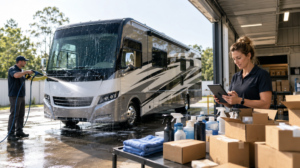
Ecommerce is usually associated with websites, digital advertising, online payments, and products delivered to customers’ doors. Yet a growing number of online retailers are discovering that sales do not have to remain confined to a computer screen. Branded recreational vehicles are giving ecommerce businesses a practical way to meet customers in person, display products, fulfill orders, and create memorable shopping experiences in different communities.
An RV can operate as a traveling showroom, mobile boutique, demonstration center, pickup location, or promotional studio. It can appear at festivals, trade shows, sporting events, campgrounds, and busy shopping districts while remaining connected to the company’s online store. For this strategy to succeed, however, the vehicle must look as professional as the website it represents.
Regular RV washing has consequently become an important part of mobile retail operations. A clean exterior helps protect the vehicle, preserve branded graphics, and establish customer confidence before anyone steps inside. In a competitive ecommerce environment, appearance can influence whether people stop, take photographs, scan a QR code, or continue walking.
Ecommerce Is Moving Beyond the Traditional Online Store 📱
Ecommerce encompasses commercial transactions conducted through websites, mobile devices, and other electronic systems. Although the purchase may occur digitally, the customer journey increasingly moves between online and physical environments.
Ecommerce businesses are building temporary stores, hosting local product demonstrations, sponsoring community activities, and participating in events where customers can interact with merchandise. A mobile showroom allows a digital-first company to support these activities without leasing permanent retail space in every market.
This model combines ecommerce convenience with the personal connection of traditional retail. Visitors can examine products, speak with brand representatives, and complete purchases through a tablet, smartphone, or self-service checkout station. Orders can be shipped later, collected from the vehicle, or fulfilled from available inventory.
The U.S. Chamber of Commerce has highlighted social commerce and connected shopping experiences among the trends creating new opportunities for small businesses. A mobile ecommerce vehicle supports this development by giving brands original content, direct customer contact, and an identifiable physical presence that can travel from one target market to another.
A Clean RV Creates a Stronger First Impression
Customers often form an opinion about a mobile store before they see its products. Dust, water marks, road film, insects, oxidation, and neglected wheels can make an otherwise impressive vehicle appear poorly managed. That appearance may undermine the trust established through polished product photography and a professionally designed website.
A clean RV communicates preparation and attention to detail. Those qualities matter when customers are considering whether to purchase from a business they previously knew only through social media or online advertising. The condition of the vehicle becomes part of the evidence customers use to evaluate the company.
This is especially important when the RV carries a wrap, logo, website address, social media handle, or QR code. Dirt can obscure important information and weaken the colors that make the branding noticeable. Consistent washing keeps promotional messages readable and gives the vehicle a better chance of attracting attention in parking lots, on highways, and at events.
Business owners searching for dependable care options may begin by comparing RV Washes Near Me before scheduling promotional tours. Making exterior care part of the operating plan helps prevent hurried cleaning immediately before an important appearance.
Mobile Retail Supports Ecommerce Growth 🚐
Mobile retail allows an ecommerce company to test geographic markets without immediately opening permanent stores. A business can visit several cities, compare sales results, collect customer feedback, and identify areas with the strongest demand. This information can guide future advertising, inventory, and expansion decisions.
The opportunity is supported by the continued scale of online retail. According to the U.S. Census Bureau’s Quarterly Retail E-Commerce Sales Report, ecommerce represents a significant portion of total retail activity in the United States. Online purchasing has become a routine part of consumer behavior, giving digital brands a strong foundation from which to build physical experiences.
A mobile store adds flexibility to that foundation. The company can promote an upcoming stop through email and social media, invite local customers to attend, and provide event-only offers. Visitors can purchase products immediately through the ecommerce store, even when the RV carries only samples or a limited selection of inventory.
The vehicle can also support product launches. Instead of relying entirely on digital advertisements, a brand can take a new collection directly to selected communities. Customers can see demonstrations, create social media content, and place orders while the launch is still generating excitement.
RV Washes Help Protect a Valuable Business Asset
A commercial RV represents a substantial investment. Beyond the vehicle itself, a business may pay for interior remodeling, shelving, displays, electrical upgrades, point-of-sale equipment, lighting, security systems, and a professionally designed wrap. Routine exterior maintenance helps safeguard that investment.
Road travel exposes an RV to grime, tree sap, insects, bird droppings, salt, and airborne contaminants. When these materials remain on the surface, they can contribute to staining or deterioration. Frequent inspection and appropriate washing make it easier to remove buildup before it causes lasting problems.
Cleaning also creates an opportunity to identify developing concerns. Staff may notice peeling wrap edges, damaged seals, loose trim, cracks, or other issues while examining the exterior. Early attention can reduce the risk of a minor defect becoming a costly repair during a sales tour.
A consistent maintenance schedule is particularly valuable for businesses operating in multiple regions. Conditions can change quickly between coastal highways, dry climates, wooded campgrounds, and winter roads. The wash schedule should reflect travel frequency, weather, storage conditions, and the material used on the vehicle’s exterior.
Every Stop Can Become Ecommerce Content 📸
A branded RV is more than transportation. It is a mobile background for photographs, short videos, livestreams, customer testimonials, and product demonstrations. When the vehicle is clean and visually appealing, it gives an ecommerce team a reusable setting for marketing content.
The company can announce each destination with photographs of the RV arriving in town. Employees can record product demonstrations outside the vehicle, interview customers, and show behind-the-scenes preparations. Visitors may also post their own pictures, extending the brand’s visibility through user-generated content.
This approach aligns with the increasing influence of mobile shopping. Forbes Advisor’s ecommerce statistics emphasize the importance of smartphones in modern purchasing behavior. A customer who sees an attractive mobile store can photograph it, visit the website, follow the brand, and complete a purchase using the same device.
A neglected vehicle limits this opportunity. Marketing teams may avoid wide shots, crop out dirty areas, or spend additional time editing images. Regular washing allows the RV to remain camera-ready, making spontaneous content easier to capture during travel.
Brand Consistency Builds Customer Confidence
Successful ecommerce brands usually maintain consistent colors, language, photography, packaging, and customer service. A mobile storefront should follow the same standards. If the website feels premium while the RV appears neglected, the experience becomes disconnected.
Current Shopify reporting on online shopping trends illustrates how ecommerce continues to evolve through social commerce, AI-assisted discovery, and changing consumer behavior. As brands adopt new ways to attract customers, recognizable presentation remains essential. Every point of contact should reinforce the same identity.
For an RV-based store, brand consistency includes clean windows, polished wheels, legible graphics, tidy awnings, organized displays, and an inviting entrance. These details create a smoother transition from seeing an online advertisement to entering the mobile space.
A well-kept RV can also strengthen relationships with event organizers and business partners. Venues are more likely to welcome a professional-looking vehicle that contributes positively to the appearance of an event. Strong presentation may help a brand secure better locations, repeat invitations, and collaborative opportunities.
Professional Presentation Encourages Mobile Sales 💳
A customer approaching an unfamiliar ecommerce brand looks for signs of legitimacy. The vehicle, staff, displays, checkout process, and published policies all contribute to that judgment. Clean surroundings support the feeling that products will be handled carefully and orders will be processed responsibly.
Trust is especially important when a mobile activation directs customers to an online checkout page. The physical experience must support the credibility of the digital transaction. Clear pricing, secure payment systems, accurate product information, and visible contact details help connect the two environments.
The Federal Trade Commission’s business guidance provides resources covering advertising, privacy, and responsibilities affecting companies that sell to consumers. Ecommerce businesses using mobile sales channels should maintain truthful promotions and consistent customer policies regardless of where a transaction begins.
Cleanliness cannot replace transparent business practices, but it strengthens the overall presentation. Customers notice whether a company appears prepared, organized, and proud of its brand. Those impressions can influence purchasing decisions, referrals, and reviews.
A Wash Schedule Reduces Last-Minute Problems
Mobile ecommerce campaigns often operate on demanding schedules. Employees may travel hundreds of miles, set up displays, coordinate inventory, create content, and attend events on consecutive days. Leaving vehicle care until the last moment introduces unnecessary pressure.
A practical maintenance plan should include routine washing, pre-event inspections, post-trip checks, and prompt removal of difficult contaminants. The business should also use products and methods appropriate for the RV’s finish, decals, wrap, windows, roof, and seals. Harsh chemicals or improper tools may damage surfaces rather than protect them.
Weather forecasts and travel routes should influence timing. Washing before a dusty road journey may provide little value, while cleaning after the trip can restore the vehicle before it reaches a customer-facing destination. Teams should also account for local water-use rules and venue restrictions when planning service.
Documenting maintenance can help managers control costs and spot recurring problems. A simple record of wash dates, service providers, observed damage, and corrective work creates useful information for budgeting and vehicle management.
Mobile Commerce Turns Maintenance Into Marketing
Routine RV washing may appear to be a basic operational expense, yet it can support several areas of ecommerce performance. It preserves the company’s mobile asset, improves the visibility of branded graphics, strengthens customer confidence, and makes marketing content easier to produce.
The U.S. Chamber of Commerce’s ecommerce business guide notes that online selling can expand a company’s reach. A mobile showroom extends that reach in a different direction by bringing the digital brand into communities where customers can experience it personally.
Each clean, well-presented appearance can generate online activity. A visitor may scan a code, join an email list, share a photograph, follow the business, or place an order. The RV therefore becomes both a storefront and a customer-acquisition tool.
Conclusion
RV washes are emerging as an important part of mobile ecommerce strategy because the vehicle represents the brand wherever it travels. A clean RV helps protect expensive exterior surfaces, preserve promotional graphics, support professional content, and create a trustworthy environment for customer interactions.
As ecommerce businesses search for practical ways to connect online convenience with real-world experiences, mobile retail offers considerable flexibility. Brands can visit new markets, demonstrate products, participate in events, and process digital sales without maintaining a permanent store in every location.
The strongest results come from treating the RV as a serious business asset rather than simple transportation. Consistent washing, inspection, and exterior care keep that asset ready for the road, ready for the camera, and ready to turn attention into measurable ecommerce growth. 🚐✨