

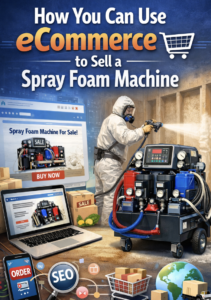
Ecommerce has matured far beyond selling T-shirts and small gadgets. Today, it is a practical, profitable channel for high-ticket industrial equipment, including spray foam machines. The same forces reshaping digital commerce in 2026, including trust-building, faster checkout experiences, and tighter competition for attention, also create an opening for equipment sellers who present their machines clearly, support buyers confidently, and fulfill orders reliably. A spray foam machine is a serious investment, and ecommerce gives you a way to package that investment into a modern buying experience that feels organized, credible, and easy to move forward with. For context on the category itself, E-commerce helps frame why digital buying behavior keeps expanding into traditionally offline industries.
Position a Spray Foam Machine for Online Buying
Selling a spray foam machine online starts with shifting the presentation from a one-off quote to a productized offer. High-ticket buyers still want human support, but ecommerce lets them self-educate before they ever speak to anyone. That means your website needs the fundamentals of equipment buying laid out in plain language: what the machine is designed to do, what jobs it fits, expected output, compatibility with common materials, power requirements, maintenance basics, included accessories, warranty coverage, and what the buyer should purchase next.
The strongest ecommerce listings for equipment behave like a buyer’s guide that happens to have a buy button. They include clear specs, photos from multiple angles, close-ups of controls and connection points, and real-world context like jobsite use cases and recommended setups. Pricing should be transparent, even if you provide options. If the exact price varies, present a starting price and a structured way to configure add-ons such as hoses, heated lines, spray guns, or spare parts kits. When the offer is structured, the buyer feels less like they are entering a negotiation and more like they are making an informed purchase.
Build Trust Signals That Reduce Purchase Friction
Trust is the currency of ecommerce, and high-ticket equipment demands even more of it. Buyers worry about shipping damage, training, warranty enforcement, and whether the machine will perform as promised. Ecommerce gives you tools to address those concerns at scale with proof and consistency.
A trust-first product page includes real documentation such as manuals, setup checklists, maintenance schedules, and warranty terms. It also includes policies written for equipment buyers, including return boundaries, service turnaround expectations, and parts availability timelines. Social proof matters, but it must be specific. Reviews that mention production output, reliability, support response time, and ease of cleaning carry more weight than generic praise. Video demos also help, not as hype, but as clarity: startup sequence, calibration, spray pattern example, and shutdown procedure. Industry commentary has increasingly emphasized that ecommerce growth is tied to credibility and repeatable customer experience, not just traffic spikes, which aligns with the 2026 focus on trust and profitability described in The New E-Commerce Playbook For 2026: Trust, Profitability And AI.
Use Financing, Checkout Options, and Payments to Win High-Ticket Orders
A spray foam machine is often purchased by contractors who think in monthly cash flow, not just total price. Ecommerce becomes dramatically more effective when you support professional buying behavior: purchase orders, invoicing, deposit-based ordering, and financing.
A clean path is to offer multiple buying routes within the same ecommerce system: pay-in-full online, pay a deposit to reserve inventory, apply for financing, or request an invoice with net terms for qualified accounts. Modern digital commerce continues to evolve around smoother payments and faster settlement, which improves conversion and reduces operational friction. Instant payments and digital wallets are becoming more central to commerce infrastructure, as discussed by the Federal Reserve in Instant payments grow the impact of digital wallets. For equipment sellers, the takeaway is straightforward: reduce the number of steps required to commit, and support the payment methods buyers already trust.
If you sell nationally, payment clarity also helps reduce disputes. Strong checkout design, clear terms, and immediate confirmation emails with ship timelines and support contacts protect both sides.
Create a Product Ecosystem That Makes Ecommerce Repeatable
The fastest way to grow ecommerce revenue with a spray foam machine is to stop thinking in single transactions and start thinking in an equipment ecosystem. The machine is the anchor product, but the profit and long-term customer relationship often comes from what follows: replacement parts, wear items, filters, lubricants, repair kits, hoses, guns, protective gear bundles, and training refreshers.
Ecommerce excels at this because it can automate reordering and recommendations. Product bundling, “frequently bought together” accessories, and subscription-style replenishment for consumables can increase average order value and reduce customer downtime. A customer who can quickly order the right parts at midnight is a customer who stays loyal. Building these repeatable revenue layers is also consistent with how ecommerce strategy is trending in 2026, including a stronger focus on profitability and operational discipline, echoed in Eight Trends Accelerating the Future of E-Commerce in 2026.
Marketplaces and Direct-to-Buyer Ecommerce Can Work Together
You do not have to choose between your own ecommerce site and marketplaces. For spray foam machines, a blended approach often performs best: your website is the brand and education hub, while marketplaces capture buyers who start their search inside large platforms.
Marketplaces can provide immediate demand, but they also bring pressure on pricing, policies, and advertising spend. Recent regulatory and competitive scrutiny in large marketplaces highlights why building a direct channel remains important. For example, marketplace pricing practices and controls have faced increased attention in Europe, covered in German cartel office bans Amazon from using price controls. For an equipment seller, the practical lesson is to avoid being dependent on a single channel. Use marketplaces to acquire customers, then build loyalty and repeat purchases through your own ecommerce store with better training, parts availability, and support resources.
Fulfillment, Freight, and Returns Need an Ecommerce-Ready Plan
High-ticket equipment logistics are different from small-parcel shipping. Ecommerce can still handle it well, but you need a freight-aware workflow. That includes accurate weights and dimensions, crate standards, liftgate requirements, appointment delivery options, and damage inspection instructions. Your ecommerce checkout should either quote freight at checkout or clearly indicate freight is confirmed after purchase with a guaranteed maximum threshold.
Returns and warranty claims should be designed for reality. Instead of vague promises, provide a clear path: troubleshooting steps, required photos or videos, serial number capture, and service ticket submission. Ecommerce tools can automate this with post-purchase portals, knowledge bases, and ticketing integrations. Equipment ecommerce wins when it reduces chaos and keeps the buyer informed.
Delivery expectations also shape buyer satisfaction. Ecommerce delivery has become a competitive differentiator across industries, and buyer expectations remain high even for freight. Consumer and business delivery priorities continue to influence commerce strategy, reflected in research like McKinsey’s overview of delivery expectations in What do US consumers want from e-commerce deliveries.
Content and Ecommerce Work Best as One System
A spray foam machine buyer needs confidence, and confidence is built through education. Ecommerce content should be designed to move a buyer forward step by step, from understanding to selection to purchase to success.
Your ecommerce site should include practical content that supports the buying decision and reduces support load later: machine comparison pages, “best fit” guides by job size, setup walkthroughs, maintenance schedules, troubleshooting libraries, and safety guidance. Case studies and contractor spotlights help, but the strongest content focuses on outcomes and clarity: reduced downtime, consistent spray quality, and predictable maintenance.
Industry retail trends also show that the line between digital and physical engagement continues to blur, and ecommerce brands are using events, education, and experience to deepen loyalty. That broader shift is captured in retail trend coverage like 10 trends and predictions for retail in 2026. For equipment, that translates into live demos, remote onboarding, and fast support as extensions of your ecommerce channel, not separate departments.
Measure What Matters and Optimize for Profit
High-ticket ecommerce can look healthy on revenue while hiding profit leaks in freight costs, returns, ad spend, and support hours. Your ecommerce analytics should track contribution margin by channel, refund rate, warranty claim frequency, time-to-first-response in support, and reorder rate for parts.
Ecommerce platforms make testing easier. You can refine product page layouts, adjust bundling, introduce deposit options, and improve post-purchase flows without rebuilding the business. Over time, small improvements compound into a stronger conversion rate and lower support burden, which makes growth feel controlled instead of chaotic.
Conclusion
Ecommerce is a strong channel for selling a spray foam machine because it turns a complex, high-ticket purchase into an organized, confidence-building experience that buyers can navigate on their schedule. Success comes from productizing the offer, stacking trust signals, supporting modern payments and financing, building an accessory ecosystem, and running fulfillment like a professional equipment operation. When your ecommerce site becomes the place where contractors learn, buy, maintain, and reorder, it stops being a simple storefront and becomes a scalable growth engine.