

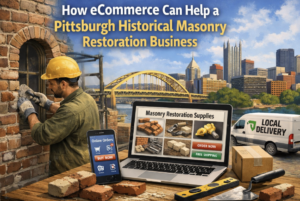
Pittsburgh historical masonry restoration is a trust-based business. Property owners, churches, institutions, and preservation-minded developers are not hiring just anyone to touch old brick, stone, mortar joints, or facades. They want proof, clarity, and confidence before they call.
That is exactly why ecommerce can be such a smart move.
Ecommerce is not only for shipping boxes across the country. In a restoration business, it can become the front door for selling consultations, collecting deposits, booking inspections, offering maintenance plans, and turning your expertise into a clean, professional buying experience. It helps a masonry restoration company look established, stay organized, and make it easier for the right clients to say yes.
The bigger retail world is already showing where buyer behavior is going. The U.S. Census Bureau reported U.S. retail e-commerce sales at $310.3 billion in Q3 2025, with ecommerce continuing to grow as a share of retail activity. That matters because your buyers are living in that same convenience-first world, even when they are hiring for specialized restoration work.
Ecommerce Helps a Restoration Business Sell Trust Before the First Call
Historical masonry restoration is not an impulse purchase. It is a high-consideration service. Clients usually need to see your workmanship, understand your process, and feel like you know how to protect the character of an older structure.
An ecommerce-enabled website helps you package trust in a way people can act on immediately. Instead of a basic contact page, you can offer structured service options like a paid site assessment, a virtual review of facade photos, a preservation consultation, or a maintenance planning session. When a client can choose a service, pay, and book in one step, your company feels easier to work with and more professional from the start.
This is especially helpful in Pittsburgh, where many property owners care deeply about preserving older buildings while still managing real budgets and timelines. Ecommerce gives them a clear path to begin, without the back-and-forth that slows down so many service sales.
You Can Sell Services, Not Just Products
A lot of contractors hear “ecommerce” and think they need shelves of physical products. That is not true.
A Pittsburgh historical masonry restoration company can use ecommerce to sell service-based offers such as:
-
Initial historic masonry condition assessments
-
On-site moisture and deterioration reviews
-
Mortar matching consultations
-
Masonry maintenance plans for commercial properties
-
Priority emergency stabilization visits
-
Annual facade checkup subscriptions
-
Preservation documentation packages for property managers
This works because ecommerce is really about transaction convenience. It allows the buyer to understand what they are getting, what it costs, and how to move forward.
Even if your larger restoration projects require custom estimates, ecommerce can still handle the “first step” offer. That one change alone can increase qualified leads because people are more likely to commit when the entry point is simple and clearly priced.
Ecommerce Makes Your Expertise More Scalable
Historical masonry restoration is highly skilled work, and your time in the field is limited. Ecommerce helps your business scale your knowledge without requiring you to be everywhere at once.
For example, you can create and sell digital resources that support your core services, such as:
-
A property owner guide for spotting early masonry damage
-
A checklist for preparing a historic building for winter in Western Pennsylvania
-
A maintenance planning template for churches and older commercial buildings
-
A buyer education guide on why mortar matching matters
These are small offers, but they do something powerful. They position your company as the authority and turn your website into a revenue-producing asset, not just a brochure.
Ecommerce also gives you a place to sell recurring value, like seasonal maintenance reminders, annual inspection memberships, or premium support plans for facility teams that manage multiple historic properties.
It Improves the Buying Experience for Busy Commercial Clients
Many historical masonry restoration projects come from organizations, not just homeowners. Think churches, schools, municipalities, property managers, and commercial building owners.
Those buyers are busy. They want less friction.
An ecommerce setup can improve the experience by letting them:
-
Request a service and pay a retainer online
-
Upload photos or building documents during checkout
-
Choose preferred inspection dates
-
Purchase a phased consultation before full project bidding
-
Receive automated confirmations and receipts
This is where a restoration company starts to stand out. You are no longer asking people to “call for details” on everything. You are helping them move.
That matters in a market where digital expectations keep rising. Retail and ecommerce news coverage continues to show how convenience, personalization, and speed shape buyer decisions across industries. Sources like Reuters Retail & Consumer, Digital Commerce 360, Retail Dive’s E-Commerce coverage, and Modern Retail consistently track how digital buying behavior keeps evolving.
Ecommerce Helps You Capture Deposits and Protect Cash Flow
Cash flow can get tight in restoration work, especially when projects are large, phased, or delayed by weather.
Ecommerce can help stabilize that by allowing you to collect:
-
Consultation fees
-
Scheduling deposits
-
Material research retainers
-
Priority service fees
-
Progress payments for approved phases
That structure is a huge advantage. It keeps the project moving and helps your team plan labor and materials more confidently.
It also reduces unpaid admin time. Instead of chasing checks or waiting on a mailed payment, your company gets a smoother intake and payment process from day one.
For a trade business built on craftsmanship, this kind of backend improvement may not feel glamorous, but it directly supports growth.
It Opens the Door to Content-Commerce, Which Builds Better Leads
A historical masonry restoration company has something most industries wish they had: visually compelling work.
Before-and-after stonework, brick repointing, facade repairs, lintel restoration, chimney rebuilding, and mortar matching all make excellent educational content. When you combine that content with ecommerce, your website becomes a lead-generation and sales machine.
For example, a blog post about preserving a historic brick facade in Pittsburgh can lead into:
-
A paid downloadable maintenance guide
-
A bookable masonry inspection
-
A seasonal assessment package
-
A consultation for long-term restoration planning
This content-commerce approach works because it educates first and sells second. It attracts people who are actively trying to understand a problem, then gives them a simple next step.
It also supports SEO and long-term visibility. If your site is regularly publishing useful information and tying it to bookable offers, you are building momentum in search and in conversions at the same time.
Ecommerce Supports New Buyer Behaviors Like AI Shopping and Social Discovery
The digital shopping world is shifting fast, and even service businesses need to pay attention.
The National Retail Federation has highlighted trends like AI agents and live shopping shaping retail behavior, while ecommerce outlets are covering agentic commerce, shoppable content, and changing digital buyer expectations. Reuters and Adobe data also showed strong online shopping activity during major sales periods, reinforcing how comfortable buyers are with completing transactions online.
That does not mean a masonry restoration company needs to become a trendy retail brand. It means your customers now expect a digital experience that is easier, clearer, and more immediate.
An ecommerce-enabled restoration website is future-friendly because it can support:
-
Instant booking options
-
Mobile payments
-
Structured service pages
-
Productized offers
-
Social media traffic to a checkout page
-
AI-friendly pages with clear service descriptions and pricing steps
That last piece matters more than most contractors realize. Clear, structured service pages are easier for search engines and AI systems to understand, which helps your business show up where buyers are searching.
It Helps You Build Better Operations Behind the Scenes
Ecommerce is not only a sales tool. It is also an operations upgrade.
When your website collects the right information during checkout or booking, your team gets cleaner job intake. You can gather property type, building age, visible damage, urgency, budget range, and photos before anyone even picks up the phone.
That means faster quoting, better scheduling, and fewer wasted site visits.
It also gives you data. You can see which offers get purchased, which service pages convert best, and where people drop off in the process. That kind of insight helps you improve your sales system over time instead of guessing.
In a specialized field like historical masonry restoration, even a small improvement in lead quality can make a big difference in revenue and job profitability.
Ecommerce Can Turn Small Jobs Into Long-Term Client Relationships
One of the smartest ways to use ecommerce in a Pittsburgh historical masonry restoration business is to create a ladder of services.
Instead of waiting for big restoration projects only, you can build a path like this:
-
Low-cost visual review or downloadable guide
-
Paid on-site assessment
-
Repair or stabilization work
-
Full restoration project
-
Annual maintenance plan
That approach brings in clients earlier, helps them trust your judgment, and increases repeat business.
It also creates a healthier business model. You are not relying only on large one-time projects. You are building recurring revenue and a stronger relationship with the people who already know your work.
For historic property owners, that is a win. They get a dependable restoration partner. For your company, it means better retention and more predictable work.
Staying Informed on Ecommerce News Helps You Make Smarter Moves
If you are going to use ecommerce well, it helps to keep one eye on where digital commerce is heading. A few strong sources to follow include:
-
E-commerce on Wikipedia for a general reference point and terminology
-
U.S. Census Quarterly Retail E-Commerce Sales Report for official trend data
-
National Retail Federation for retail behavior and digital trend coverage
-
Reuters Retail & Consumer News for major retail and commerce developments
-
Digital Commerce 360 Ecommerce News for practical ecommerce industry reporting
-
Retail Dive E-Commerce for retail technology and platform news
-
Modern Retail for strategy-focused coverage on digital retail shifts
These are helpful because they keep your business thinking beyond “just a website.” They help you see how customer expectations are changing so you can stay ahead instead of reacting late.
Conclusion
A Pittsburgh historical masonry restoration business is built on craftsmanship, trust, and reputation. Ecommerce does not replace any of that. It strengthens it.
It helps you present your services clearly, collect payments faster, book work more efficiently, and turn your expertise into a smoother buying experience. It also helps your company grow in a market where even high-trust, high-skill services are being chosen by people who expect digital convenience.
The masonry work may be historic, but the way clients hire you does not have to be old-fashioned. With the right ecommerce setup, your business can preserve the past while building a stronger future online. 🏛️✨